NFC Integration in Watch Casings: The Path to Digital Product Passports
Mar 2, 2026
8 min read
The Watch Industry's Digital Transformation: Why NFC Integration Is Now
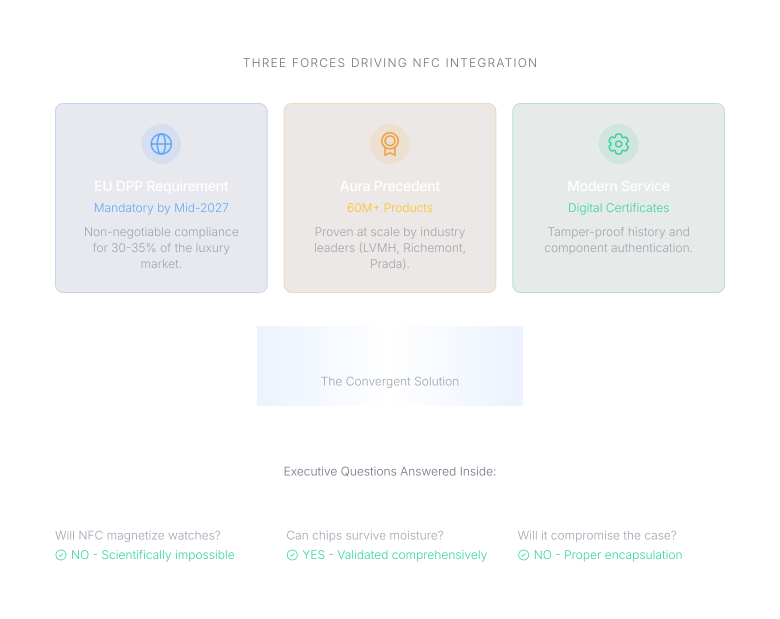
Three simultaneous developments are reshaping the watch industry's approach to service tracking, authentication, and customer engagement:
1. Regulatory Mandate: The EU's Digital Product Passport (DPP) requirement becomes mandatory for all products sold in EU markets by mid-2027. With luxury watches representing a significant portion of EU sales, compliance is non-negotiable.
2. Industry Precedent: Major luxury groups—LVMH, Richemont, Prada—have already embedded NFC chips in over 60 million products through the Aura Blockchain Consortium. The technology is proven at scale in luxury goods.
3. Service Tracking Evolution: Watch servicing brands are seeking reliable, tamper-proof methods to track service history, authenticate components, and provide customers with digital service certificates. Paper records no longer meet modern expectations.
These forces converge on a single solution: embedding NFC chips with blockchain-backed authentication into watch casings. However, watch industry executives rightly ask critical technical questions before implementation:
Will NFC chips magnetize our watches? (Answer: No—scientifically impossible)
Can chips survive water exposure? (Answer: Yes—validated through testing and specifications)
Will integration compromise watch integrity? (Answer: No—proper encapsulation protects it)
This document provides comprehensive technical validation addressing every concern, supported by scientific principles, direct testing results, manufacturer specifications, and proven integration methodologies. For watch servicing companies and brands, the question is no longer "if" but "how" to implement NFC integration.
The Regulatory & Commercial Imperative
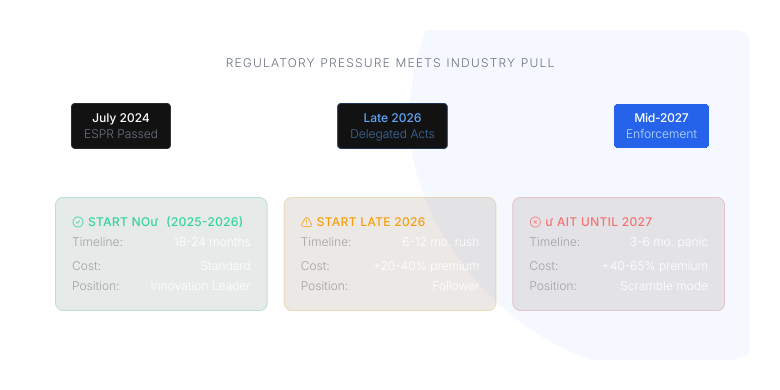
The European Union's Ecodesign for Sustainable Products Regulation (ESPR) passed into law in July 2024, establishing Digital Product Passports as mandatory for products sold in EU markets. For the watch industry, the timeline is clear: Late 2026 sees delegated acts finalized, and by Mid-2027, enforcement begins. No DPP = No EU Market Access.
DPP requirements for watches include a unique digital identity (QR or NFC), material origin data, service history tracking, and ownership transfer capabilities. While regulations approach, luxury industry leaders have proactively deployed NFC technology. The Aura Blockchain Consortium (LVMH, Prada, Richemont) has already embedded NFC chips in over 60 million luxury products.
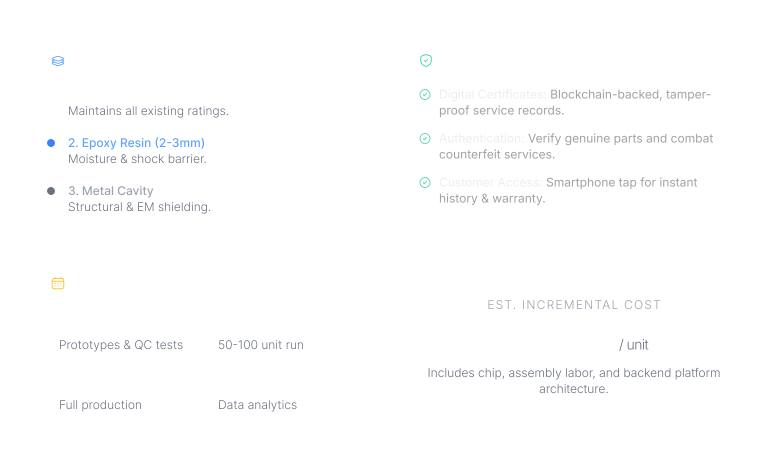
Beyond regulatory compliance, watch servicing companies see clear operational value: tamper-proof digital service certificates, component authentication to combat counterfeits, customer transparency via smartphone access, and automated warranty management.
Addressing Magnetism Concerns: The Science of Safety
Watch industry professionals rightly protect against magnetism. When evaluating NFC chip integration, the primary question is: "Will these chips magnetize our watches?" The scientific answer is definitive: No—it's physically impossible.
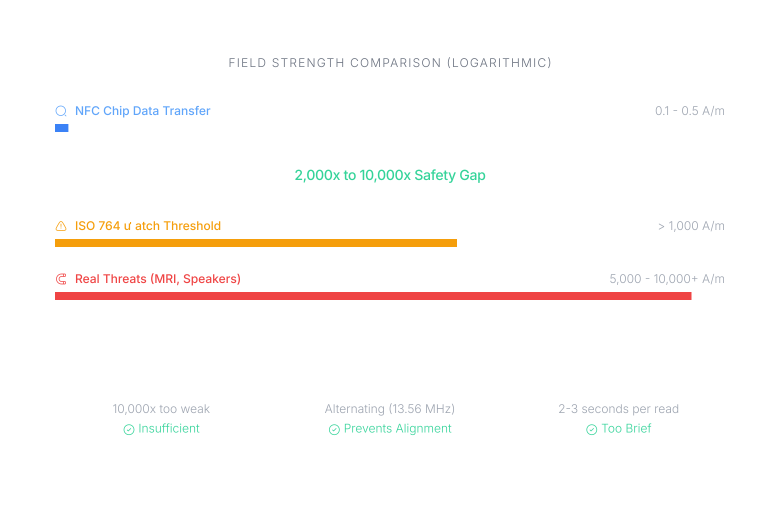
NFC (Near Field Communication) operates on electromagnetic induction at 13.56 MHz, drawing minimal power (0.1-0.5 watts) only when read. It fails to magnetize watches due to three physical barriers:
Field Strength: NFC fields are ~0.1-0.5 A/m. Watch magnetization requires >1,000 A/m. NFC is up to 10,000 times too weak.
Alternating Field: Magnetization requires a static (DC) field to align domains. NFC uses an alternating (AC) field changing millions of times per second.
Duration: Exposure lasts only 2-3 seconds during a scan.
Water Resistance: Dual Validation
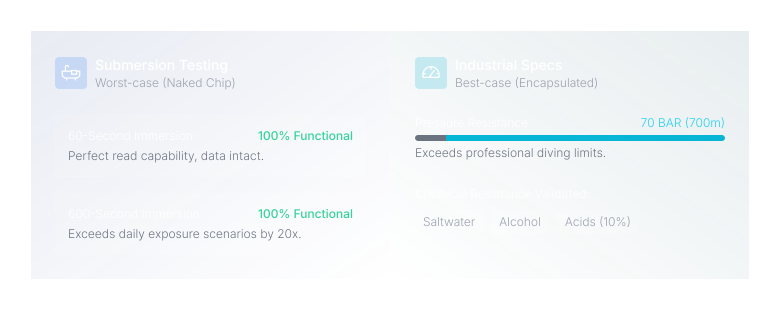
Watches face constant moisture exposure. Executives need confidence that chips won't fail or compromise case integrity. Water resistance has been validated through both direct TrataTech testing and comprehensive manufacturer specifications.
In our worst-case scenario testing, naked ICODE SLIX2 chips (no protective encapsulation) were submerged in water for 1-minute and 10-minute intervals. The result: 100% functionality with zero data degradation, far exceeding typical handwashing or splash exposure times.
From an industrial standpoint, manufacturers rate properly encapsulated chips at 70 bar isostatic pressure (equivalent to ~700 meters depth) and IP68 for continuous immersion. When integrated into a watch, the chip receives three layers of protection: a metal cavity, a 2-3mm resin coating, and the existing watch case seals.
Implementation: Proven Methods
Based on manufacturer-documented approaches, integrating NFC chips into watch casings follows a multi-layer protection methodology. A precise 1-2mm cavity is carved into the caseback metal, providing structural shielding. The chip is seated and fully sealed with a 2-3mm epoxy resin layer. Finally, the outer watch case maintains all its original gaskets and water resistance ratings.
The cost is negligible relative to luxury watch value: approximately $6-$18 per unit total (chip + integration labor + backend). The ROI is driven immediately by reducing warranty fraud, increasing service retention, and ensuring market access compliance.
Technical Validation Complete. Business Case Clear.
Watch servicing companies and brands that implement NFC integration in the 2025-2026 window will position themselves as leaders, meeting regulatory requirements while delivering operational value far beyond basic compliance. The question is no longer "if" but "when"—and the strategic answer is now.
Ready to explore NFC integration?
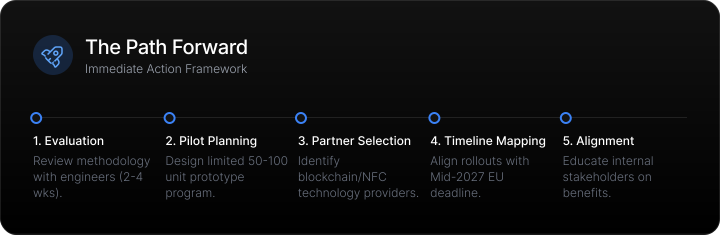
We provide technical consultation, pilot program design, and implementation planning for watch servicing companies and watch brands evaluating NFC chip integration. Contact us to discuss your specific requirements, review integration methodologies, and develop a customized roadmap aligned with the 2027 DPP deadline.